Overview
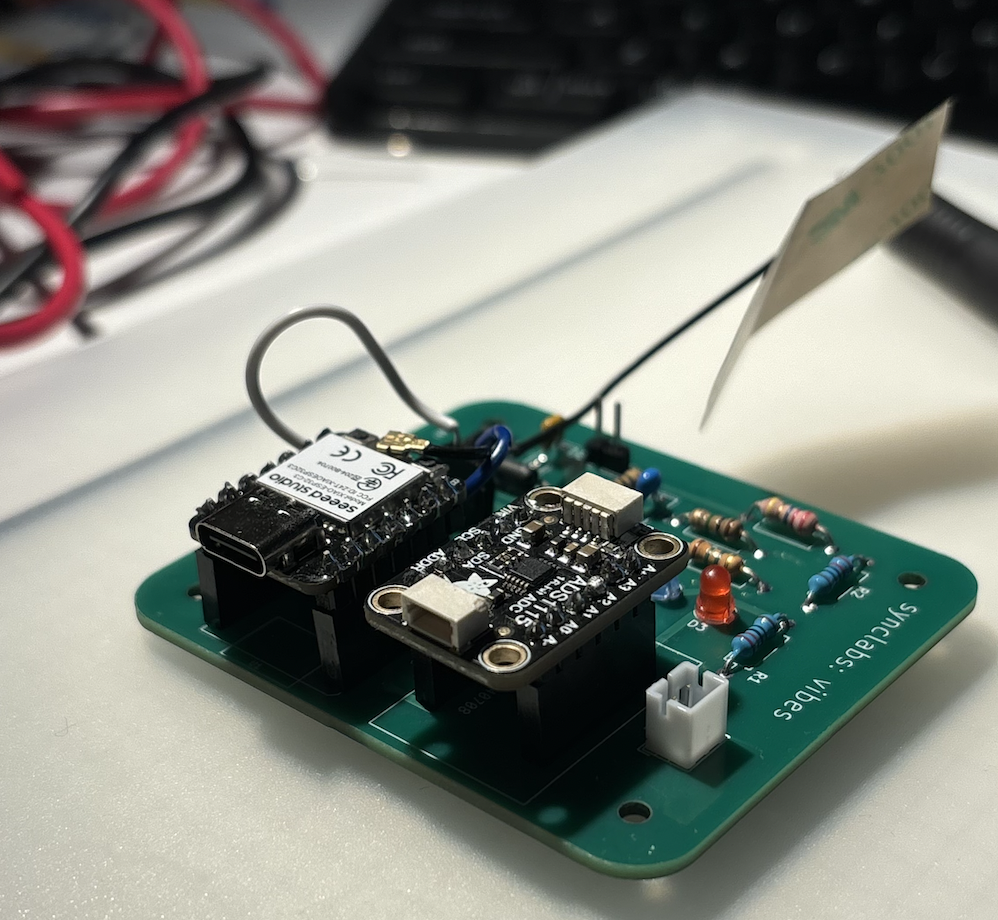
A custom PCB featuring vibration sensors and wireless communication for elderly fall detection using floor vibrations. The system uses anomaly detection algorithms to identify falls, operates at low power, and sends alerts to caregivers. It was designed to run on battery power and be installed discreetly in bathrooms.
Technologies Used
- CAD: KiCad, Fusion 360
- Programming: C++, PlatformIO, Python, BLE
- Electronics: Op-amps, ADC, piezo sensors
- Bench Tools: Oscilloscope, soldering, multimeter, signal generator
Key Features
- Low-power design (~2 weeks battery life)
- Charging support
- Status LEDs
- Wireless communication
Contributions
I designed, prototyped, and assembled the PCBs. I focused on low-power optimization, tuning the fall detection algorithm using a Python test suite, and designing 3D-printed mounts to ensure consistent sensor coupling to the floor.
Challenges
This was one of my first complete PCB designs and came with early routing and grounding mistakes that I quickly learned from. Signal processing was also challenging — the sensor signals were extremely small, requiring careful amplification and noise mitigation. I discovered that noisy power supplies during programming could corrupt ADC readings, reinforcing the importance of clean power and grounding.
Developed during my first summer @ Synclabs, starting June 2024
Other Photos
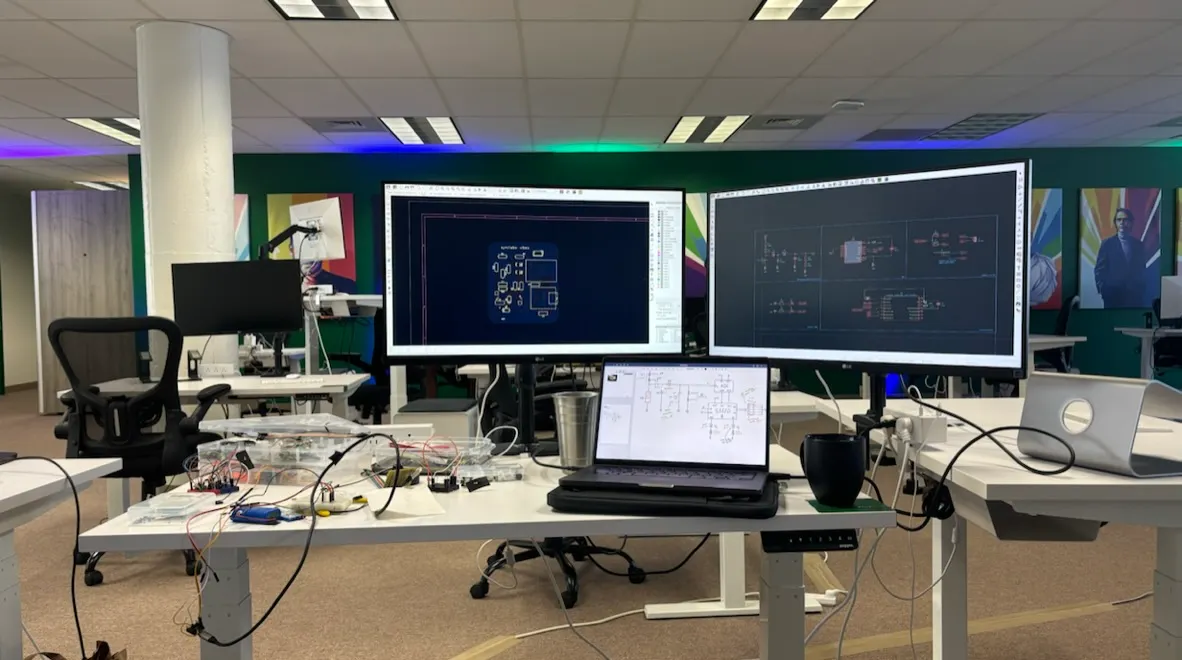
Working at an office in SF, right out of high school!
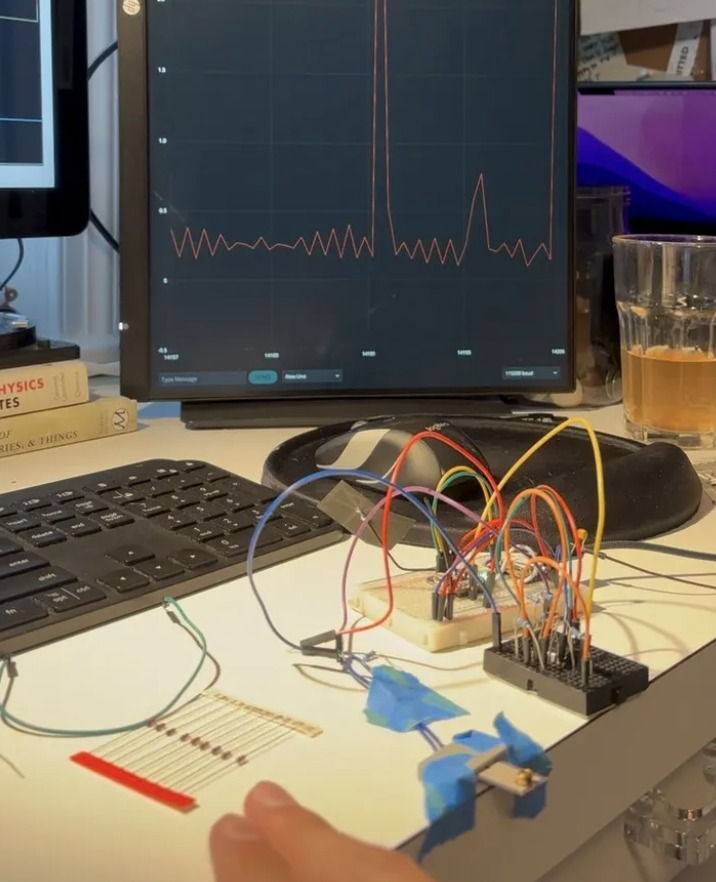
Live signal analysis for first prototype
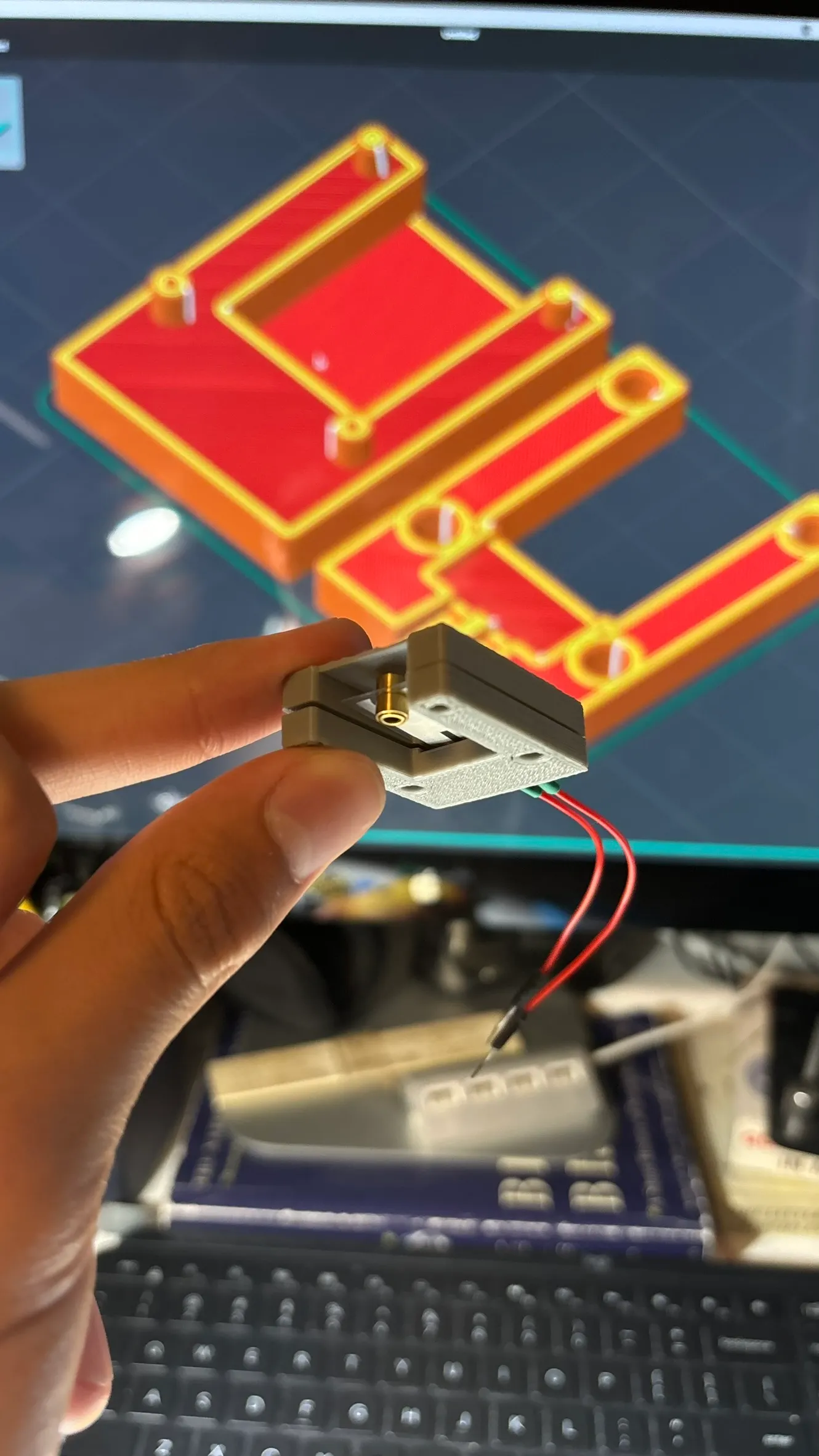
Snap fit piezo enclosure